


It’s been a difficult several weeks. Our H4D team has suffered from writer’s block complicated by abject exhaustion. We participated in marches to resist Indiana’s newest iteration of the KKK, we survived 100 year floods that ravaged our homes and local communities. We organized vigils and rallies to raise awareness about the ICE internment camps in Miami county. We watched as ICE continues to terrorize our cities, murdering and disappearing people in our streets. Indianapolis suffered an ICE surge that was aided and abetted by our MAGA governor and establishment Democrat mayor. The current occupant of the White House is a global embarrassment and petty grifter-in-chief.
What can we possibly say about the shitshow occurring at the local and national level that would be worth our reader’s time and attention? Everyone’s inboxes are flooded with an onslaught of Substack posts. Signal chats are impossible to keep up with and our smartwatches are constantly vibrating with notifications announcing yet more evidence of the destruction of our democracy or warning us that our heart rate and stress levels are in the danger zone.
Our brains have not evolved to take in the massive amount of information that we have available in the palm of our hands. Information sobriety is a new skillset we all need if we are to navigate—let alone survive this ‘flood the zone’ tactic of authoritarianism that has captured our federal and state governments.
There are also good things happening and we are winning as we inch closer to the midterms. But you don’t need us to repeat the good news. Thankfully, we have Robert Hubbell’s Today's Edition Newsletter, Jessica Craven’s Chop Wood Carry Water and several other publications that help to keep us grounded and sane.
What is there left to say?

Did You Know:
In late August I was en route to Dulles airport returning home after attending the Virginia Grassroots Coalition Women’s Summit in Tysons, Virginia. (H4D was there to learn from our sister grassroots activists). My watch vibrated and glancing down, I saw Dolly Parton’s name float across the notification feed. I suspected it was news that she had just died. I wasn’t a huge fan of her style of music, but I admired her ‘badass’ authenticity and how she used her power and influence to make the world a better place. I’ve been told that bad news comes in threes. Sure enough, over the course of the next two weeks, we lost two other American heroes.
A week after Dolly Parton died, we lost Wendell Berry, a beloved poet, essayist, environmentalist, activist and farmer. Berry championed the agrarian life and was an early activist for sustainable farming. His poetry is a touchstone in my consulting practice. And then, the first week of September, Gloria Steinem passed. Steinem co-lead a movement for women’s equality and helped midwife a movement of consciousness raising and second wave feminism. We lost three American icons in less than three weeks. They leave a wake of grace and grief for those of us left behind. Each of them offered us a prophetic vision of a more just, sustainable and humane future.
Why It Matters:
These three lives are guides for these times; offering similar wisdom but delivered in profoundly different styles. They are mentors, models, and muses for those of us left behind. Our world desperately needs for their legacies to continue in us and through us, each in our own unique way.
It was Steinem’s death that affected me the most. She left a fierce legacy of activism and co-founded a movement that changed the world. I grieved the loss of each of these icons, but as I read the tributes for each that poured in from around the world, I learned something that I didn’t know about Gloria Steinem.
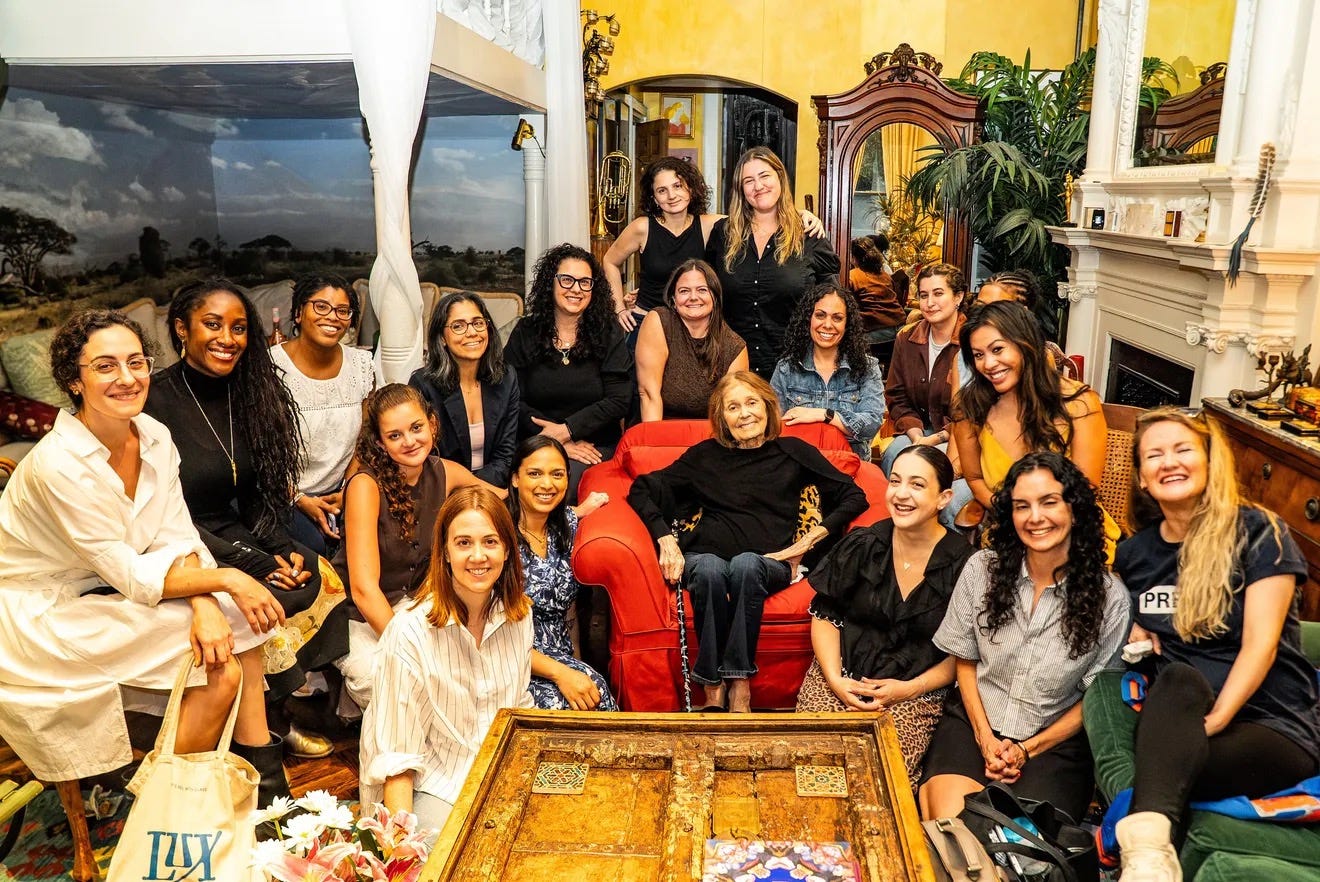
I was unaware that she hosted ‘talking circles’ in her New York apartment for decades. She was profoundly influenced by her friend, Wilma Mankiller, the former Principal Chief of the Cherokee Nation. It was from Wilma that she learned about the power of talking circles. In her 2015 memoir, My Life on the Road, Steinem said:
If you want people to listen to you, you have to listen to them. If you hope people will change how they live, you have to know how they live. If you want people to see you, you have to sit down with them eye-to-eye.
Steinem used these sacred circles to build the feminist movement. She teaches us that if we are to build a movement in this moment, a pro-democracy, pro-humanity, pro-civil rights movement for the 21st century, small circles of conversations are our secret sauce. She puts a fine point on that by saying:
The source of every social justice movement is people sitting in circles saying the unsayable thing and discovering that it’s happened to other people and if you come together, you can change it.
What We Can Do:
We need these small, intimate and diverse circles more than ever. We must gather together in our shared humanity and talk about how we might make the world a better place for ourselves, our families, our community and our world. It is only in community and in our conversations that we can evolve into greater human capacity for love and be able to see how interdependent and interconnected we are to each other and all of creation. If we are to resist the evil that has captured our politics and our institutions, each of us must find our voice and be willing to live our lives as witness to what we say we value.
When my youngest son was about three years old, he came into the kitchen to tell me somewhat that mattered to him. My back was to him because I was washing dishes, and as I listened I would respond to what he was saying, but kept my back to him as I continued my household chore. He wasn’t having it, and finally said in exasperation, “Mommy, listen with your eyes.” Children know that listening is an act of love. It’s a lesson we need to relearn.
Between now and election day, let’s gather ourselves in circles to share the ‘unsayable’ and look at each other eye-to-eye. Let’s talk about what matters most to each of us and be hospitable to one another. We must be willing to be changed by the conversation while remaining true to our deepest values. And, we must be prudent in our choice of conversation partners. Approximately 67% of the population are aching or at least open to having these conversations. Don’t bother with the other 33%. We don’t have the time or energy to spare. You know who these folks are.
A few simple conversational phrases and suggestions that might be helpful.
“What are your feelings about this upcoming election?”
“I hear you and…..” (not but)
“I can hear the emotion in your voice, this must matter a great deal to you.”
“Tell me more about how you have come to that opinion?”
“I appreciate your honesty, can I share a bit with you about what matters most to me?”
“How do you feel about what I just shared”?
“This conversation feels really important to me.”
“I am voting mostly democratic in this election. I don’t agree with everything they say, and I know the party isn’t perfect, but I believe they are our best chance for a better future for ourselves and the next generation. I’d love it if we could all go together.”
Listen to understand, not to find an opening to make your point or to disagree.
Practice having an open mind and an open heart. Its a radical practice.
These conversations can happen in planned gatherings or spontaneously while waiting in line for coffee or talking with a neighbor who is passing by. They are easier than you might think.
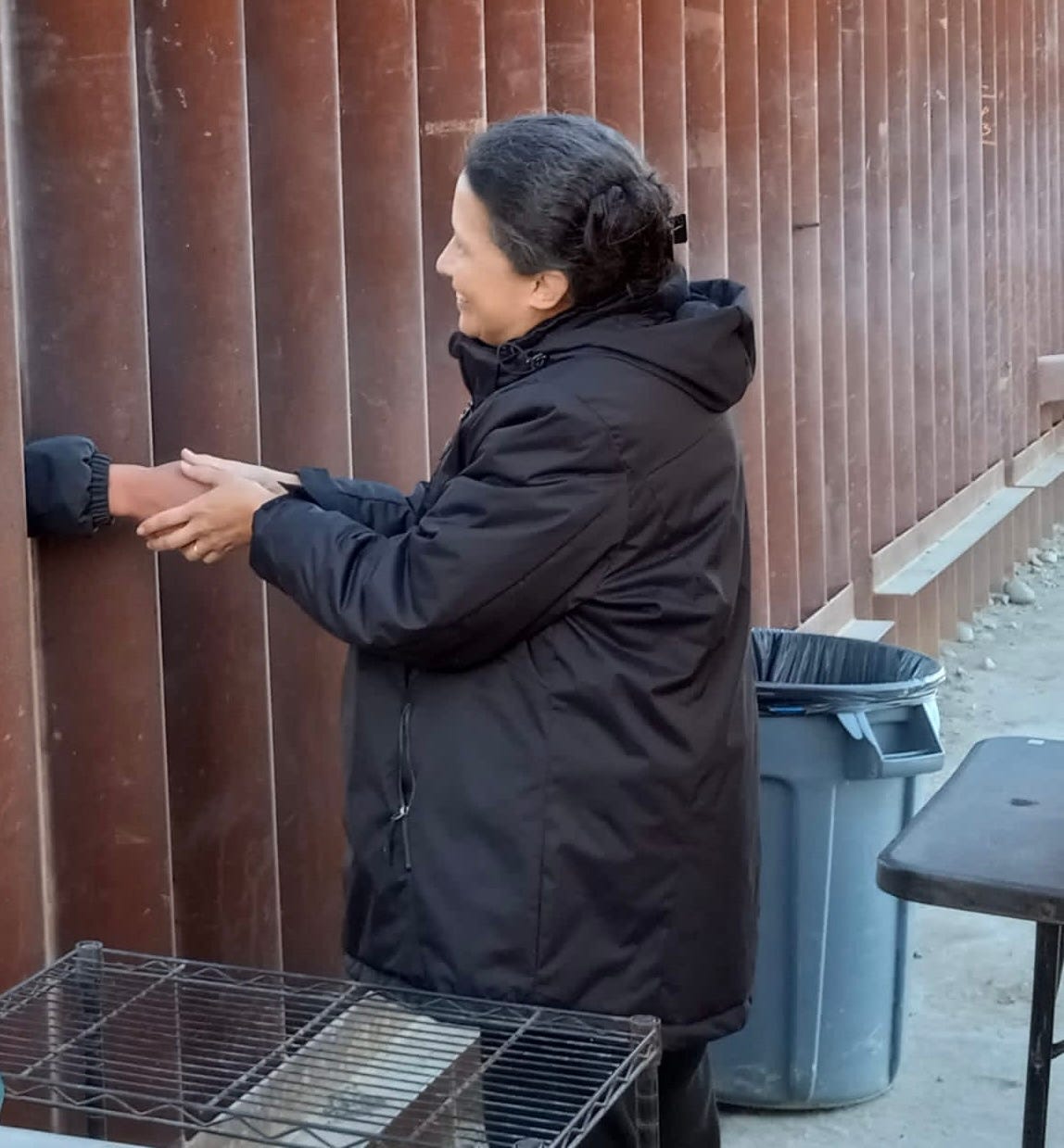
As Gloria said, “empathy is the most radical of human emotions.” Let’s be radical in our love for one another and together build this movement that can change the world.
Empathetically yours,
Debbie & the H4D team
Eloquent antidote to the contempt for empathy spewed by such tech titans as Musk and Thiel. Thank you for all you're doing to help save our precious democracy!
Thanks so much for this. Your suggestions for things to say during a difficult conversation—prompts and phrases that can keep the conversation open—are just right!