


I have long been intrigued by the intersectionality of spirituality and social movements. Our country will celebrate its 250th birthday in just a few days, a country that was literally founded by a social movement within the colonies to resist the tyranny of a greedy and vengeful King.
Thomas Jefferson penned the first drafts of the Declaration of Independence as if he were writing a sacred text. Jefferson fiercely believed in the separation of church and state, and as a theist, he believed in a ‘benevolent creator God’ who created humankind as equals. Jefferson actually used the word sacred in an early draft when he wrote:
We hold these truths to be sacred and undeniable, that all men are created equal.
Benjamin Franklin was in awe of Jefferson’s facility with prose, and encouraged his timid friend to draft the document of the Second Continental Congress that severed the ties from the King. Franklin was co-author and edited the various versions. He wasn’t keen on the use of the phrase ‘sacred and undeniable’ so revised the document to read ‘self-evident’.
We hold these truths to be self-evident, that all men are created equal.
Another important edit, this time by Jefferson himself was when he blotted out the word ‘subjects’ and used the word ‘citizens’ instead.
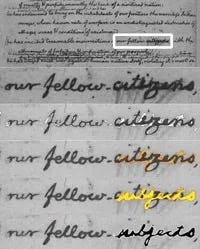
Through the use of digital technology, we are able to see Jefferson’s edits. It is believed that even before the ink had dried, Jefferson realized that ‘fellow subjects’ was the language of a monarchy, not an emerging democracy.
Did You Know:
Our imperfect republic has a continuous and bloody journey of striving to live into the truths that were proclaimed in our founding documents, most often lead by spiritual leaders putting their theology into practice as movement builders.
An early social movement of protest was the abolitionist movement, its roots preceded the founding of our independence as evidenced by a protest document written by the Germantown Quakers (Friends) in 1688. Their theology clashed with the brutality of slavery and they were not quiet about it.
More than 250 years later, Martin Luther King, a Baptist preacher with a PhD in theology catalyzed and amplified the civil rights movement that had been generations in the making. He became the moral voice of the movement. King was inspired by the teachings of his mentor Mahatma Gandhi. It was Gandhi who influenced MLK’s understanding of nonviolence as the way of resistance. Gandhi was a devout Hindu, and drew his inspiration from multiple theologies, including Christianity, Islam and Buddhism.
And of course, there was Dietrich Bonhoeffer, Lutheran pastor, theologian, and spy who plotted to assassinate Adolf Hitler in order to save the lives of millions of Jews. He believed his faith compelled him to face the monstrous evil of the regime, and was martyred for his theology and his actions. Our modern martyrs are everyday theologians who drive minivans and help fellow citizens up from the snow in their efforts to protect today’s targets of evil.
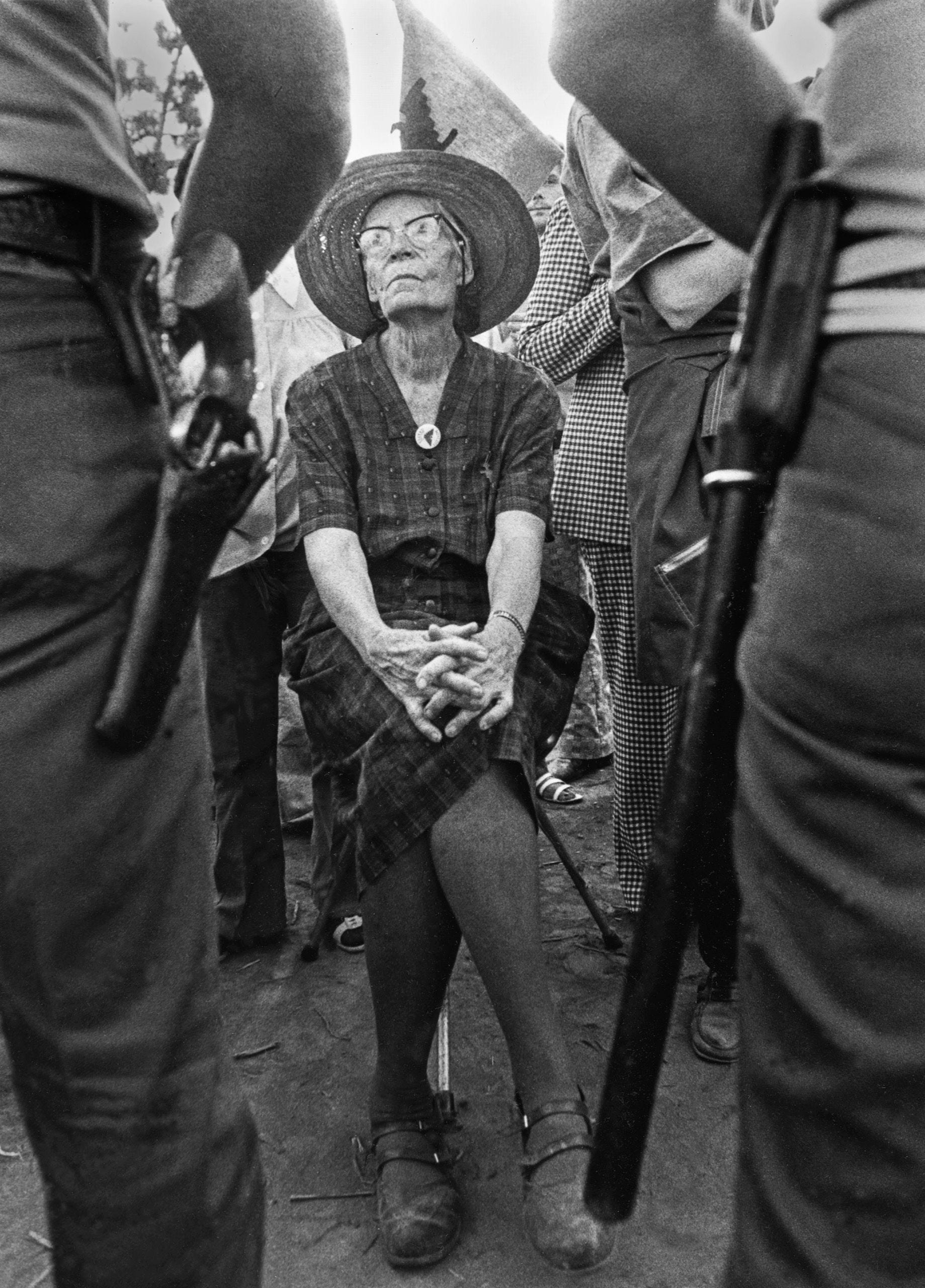
Dorothy Day, perhaps best known for founding the Catholic Worker Movement, was a convert to Catholicism. She was a political activist, supporter of the women’s suffrage movement, and consorted with “left wing intellectuals” in her younger days. In 1973, at the age of 76, she traveled to California to support the farmworkers movement and their strikes for better wages and working conditions. She was jailed for her activism, practiced nonviolent resistance, and was animated by the theology of Catholic social teachings.
There is a rich and profound heritage of social movements grounded in theological inquiry.
Why It Matters:
A dear friend and colleague, Katie Gordon, also writes a Substack called Following the Monastic Impulse. She is my sister in political activism and has taught me a lot about how this work must be grounded in Love, community and joy!
In her last post, she defined theology as:
Simply put, theology is the way we speak of the sacred. Literally looking at the Greek etymology, it means the study (logia) of God (theos). But even God is bigger than those three little letters can contain, and so we stretch God—-and thus theology—to include our experience and understanding of the divine.
As I watch my H4D sisters and brothers work tirelessly, my neighbors as we gather each Tuesday for our street side protest, listen to the conversations we have as a neighborhood group; bear witness as we drag our exhausted and way weary bodies to protests, zoom meetings, trainings, meet ups, and endless analysis of strategy and calls to action, I sense a searching for what is sacred and divine.
Katie went on to quote theologian Diamond O’Murchu in his latest book Reclaiming Spirituality: A New Spiritual Framework for Today’s World. He says:
“Now, more than ever, I believe theology is uniquely placed to grapple with the great questions of our age . To do that, however, theologians—and there is something of a theologian in each of us—have to drink from many wells, and the deeper they are, the better.” (emphasis mine)
Social movements are always seeking to respond to the ‘great questions of our age’, both for good and for ill. For those of opposing this regime, we are literally putting our time, our livelihoods and for some, our lives, on the line to resist the tyranny of our state and local governments.

The MAGA movement is asking different questions. White Christian nationalism’s theology believes in a vengeful, wrathful, and hierarchical deity, with a pecking order of power and submission. It is misogynistic and racist at its core.
This regime’s beliefs in what is sacred influences the way they govern, their policies, and their motives for undermining our democratic institutions. They rejoice in unraveling the successes of our social movements, and their world view is in stark contrast to the precepts of our founding documents.
Theology matters.
What You Can Do:
Simone Weil, a French philosopher, mystic, and political activist lived during WWII and experienced the horrors of totalitarianism. Because of what she saw she advised that “Absolute unmixed attention is prayer”.
Our 2026 midterms will be a bellwether moment. We will either turn the tide or cement our demise as a great experiment in self governance. MAGA may be fading, but the oligarchs and architects of Project 2025 have control of the levers of all of our institutions. This free-fall from democracy is bigger than Trump who is crumbling by the day.
This is not the time to despair or sit it out. We must all channel our inner theologian and decide how we are being called to be light bearers and movement builders for a more free and sane tomorrow.
We must pay attention and not avert our eyes to what is happening in our country. We are experiencing a consolidation of power—a fascist takeover.
We must join with our community, our networks and activist groups that we trust to make sure that the 2026 elections are a massive mandate against MAGA, corrupt politicians, and ineffective leaders of both parties.
We must stop doomscrolling and only pay attention to the few voices that we can trust to tell us the truth…the rest is dangerous distraction.
We must learn to ask the great questions of our age. Tired questions exhaust us!
We have to stop propping up the status quo and work for the ‘not yet’!
Let’s celebrate the 4th of July and the commemoration of our 250th anniversary by remembering our humble beginnings, the deepest longings of our imperfect founders and commit to making sure that we have another few decades to living into our the sacred and self-evident truths that:
We are all created equal and are endowed by our Creator with certain unalienable Rights, among these are Life, Liberty and Pursuit of Happiness….and that whenever any Form of Government becomes destructive to these Ends, it is the Right of the people to alter or to abolish it and to institute new Government…
Let’s end this reign of tyranny at the ballot box. Our vote is our prayer!
Yours in sacred resistance,
Debbie & the H4D team

I was just thinking about the intersection of spirituality and activism, so this is timely and so well articulated. Thank you so much for sharing!
I have long been fascinated by the role of movements and how they can carry a collective consciousness for greater evolution of the species or regression. Now that I am steeped in a movement myself, I am even more convinced that this is so. Thank you for reading H4D!